
Antonio Allegri da Correggio, known simply as Correggio, holds a distinguished place in the annals of art history, celebrated for his pioneering contributions to the development of illusionism.

Table of Contents
- Introduction
- Biography of Correggio
- Understanding Illusionism in Art
- Correggio’s Mastery of Illusionistic Ceiling Frescoes
- Notable Works: A Closer Look
- Impact on Baroque Art
- Conclusion
- Questions and Answers
Introduction
Correggio’s work, characterized by dynamic compositions, masterful use of perspective, and ethereal use of light and shadow, not only captivated his contemporaries but also laid the groundwork for the Baroque movement. This article delves into Correggio’s life and his remarkable ability to bring heavenly visions to earth through his illusionistic frescoes, transforming the flat surfaces of ceilings and domes into open skies and celestial realms. Correggio’s artistry bridged the gap between the human and the divine, inviting viewers into immersive, transcendental experiences that remain unparalleled in their emotional depth and technical mastery.
Biography of Correggio
Born in the small town of Correggio in Northern Italy around 1489, Antonio Allegri received his moniker from his place of birth, a common practice of the era. Little is known about his early life and training, which remains a subject of speculation among historians. However, it is clear that by his early twenties, Correggio began to exhibit a profound understanding of the Renaissance innovations of perspective and chiaroscuro, which he would later transcend in his work. Unlike many of his contemporaries, Correggio spent much of his career in Northern Italy, away from the artistic hubs of Florence and Rome. Yet, he managed to develop a distinctive style, marked by sensuality, dynamic movement, and a unique approach to illusionistic painting that would influence generations of artists.
Understanding Illusionism in Art
Illusionism in art refers to the technique of using realistic imagery to create the optical illusion that depicted objects exist in three-dimensional space. This technique became particularly significant during the Renaissance and reached new heights in the Baroque period. Illusionistic art tricks the eye, inviting viewers into a visually constructed world that extends beyond the physical boundaries of the canvas or architectural space. Correggio’s work stands as a testament to the power of illusionism, as he manipulated perspective, light, and composition to dissolve the barrier between the real and the depicted, making the painted space seem as if it were part of the viewer’s own reality.
Correggio’s Mastery of Illusionistic Ceiling Frescoes
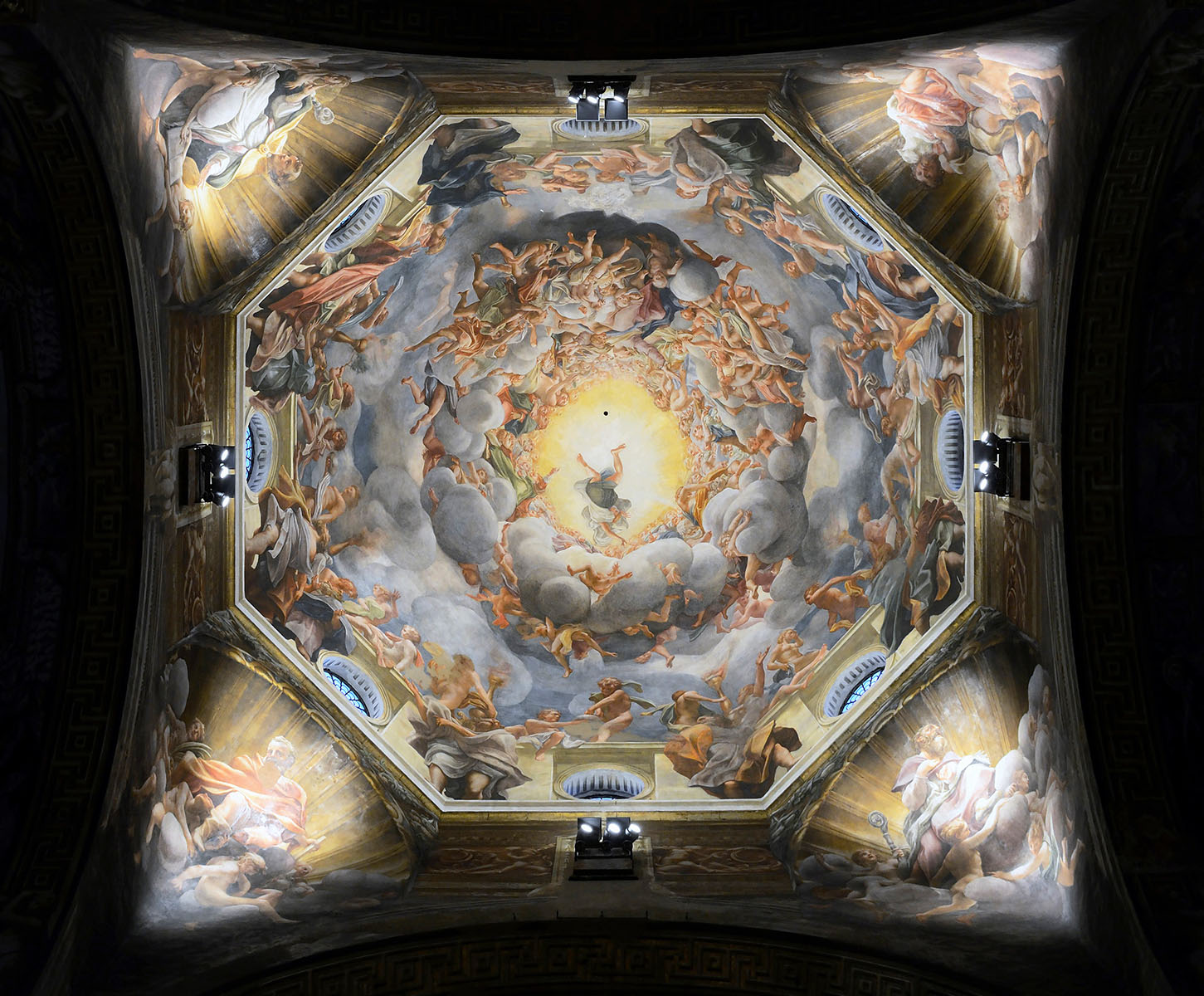
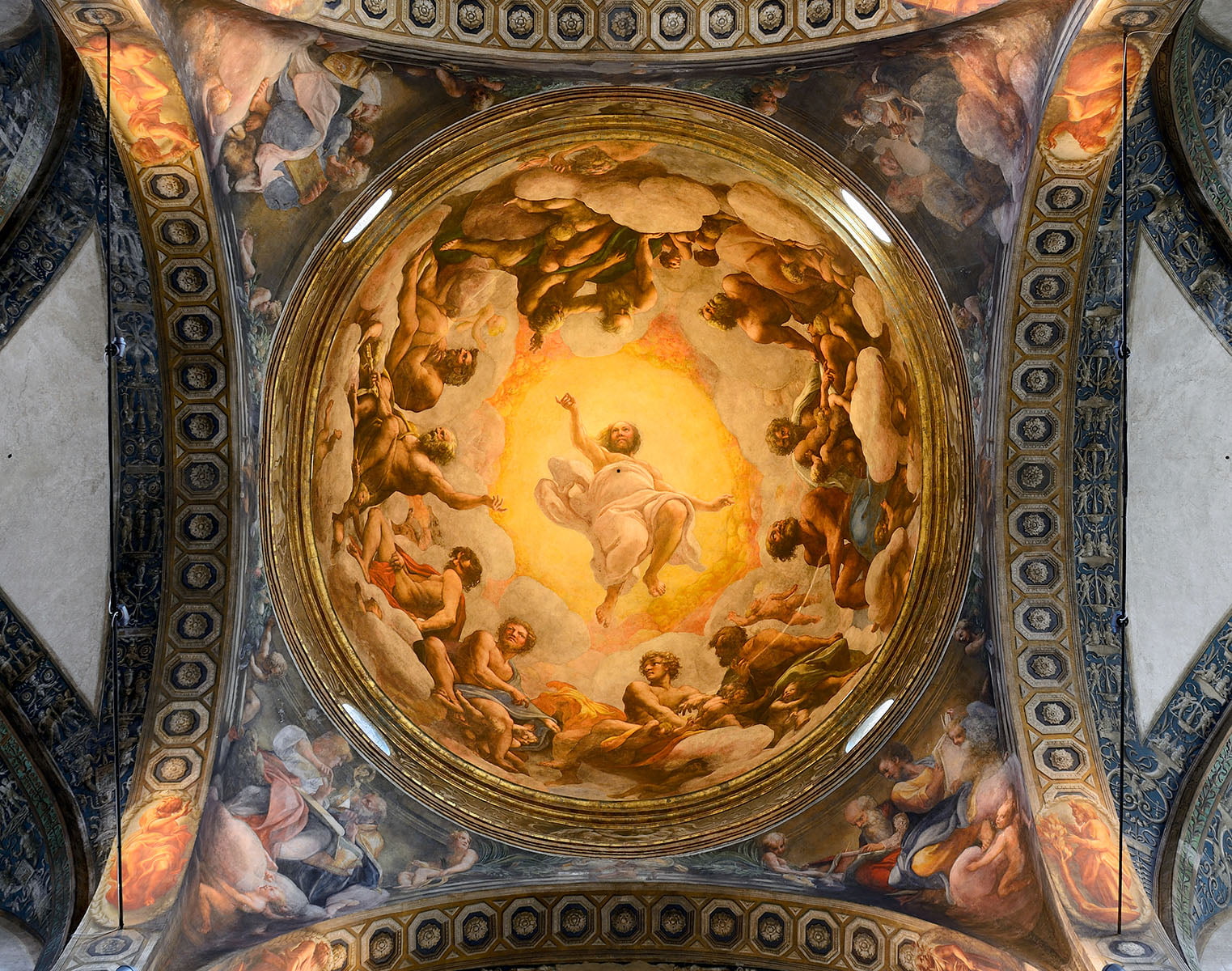
Correggio’s most celebrated contributions to the art of illusionism are found in his ceiling frescoes, where he employed bold perspectives and dramatic foreshortening to create the sensation of infinite space. His frescoes in the dome of Parma Cathedral, particularly “The Assumption of the Virgin,” showcase his ability to transform the architecture into a canvas for his heavenly visions. Here, Correggio depicts the Virgin ascending into heaven, surrounded by a host of angels, in a composition that seems to open the dome into the sky itself. Similarly, his work in the dome of San Giovanni Evangelista, featuring “The Vision of St. John on Patmos,” illustrates his skill in creating dynamic compositions that engage the viewer’s senses, blurring the lines between the earthly and the divine.
Notable Works: A Closer Look
Correggio’s oeuvre is a testament to his mastery of illusionism and his innovative approach to painting. Below are five of his most notable works, each illustrating his ability to transform paint into visions of heavenly beauty and emotional depth:
“The Assumption of the Virgin” (1526-1530), Parma Cathedral Dome
This monumental fresco covers the dome of the Parma Cathedral and is considered one of Correggio’s masterpieces. The work depicts the Virgin Mary ascending into heaven, surrounded by a host of angels and saints in a swirling vortex that seems to open the architecture into the sky. Correggio’s use of foreshortening and dramatic perspective creates a stunning illusion of depth, inviting viewers to gaze upwards into the celestial scene.
“The Vision of St. John on Patmos” (1520-1522), San Giovanni Evangelista Dome, Parma
For the dome of San Giovanni Evangelista, Correggio painted a vivid depiction of St. John’s vision from the Book of Revelation. The dynamic composition, with figures seeming to emerge from the heavens into the viewer’s space, showcases Correggio’s skill in creating complex, illusionistic scenes that blur the boundaries between the earthly and the divine.
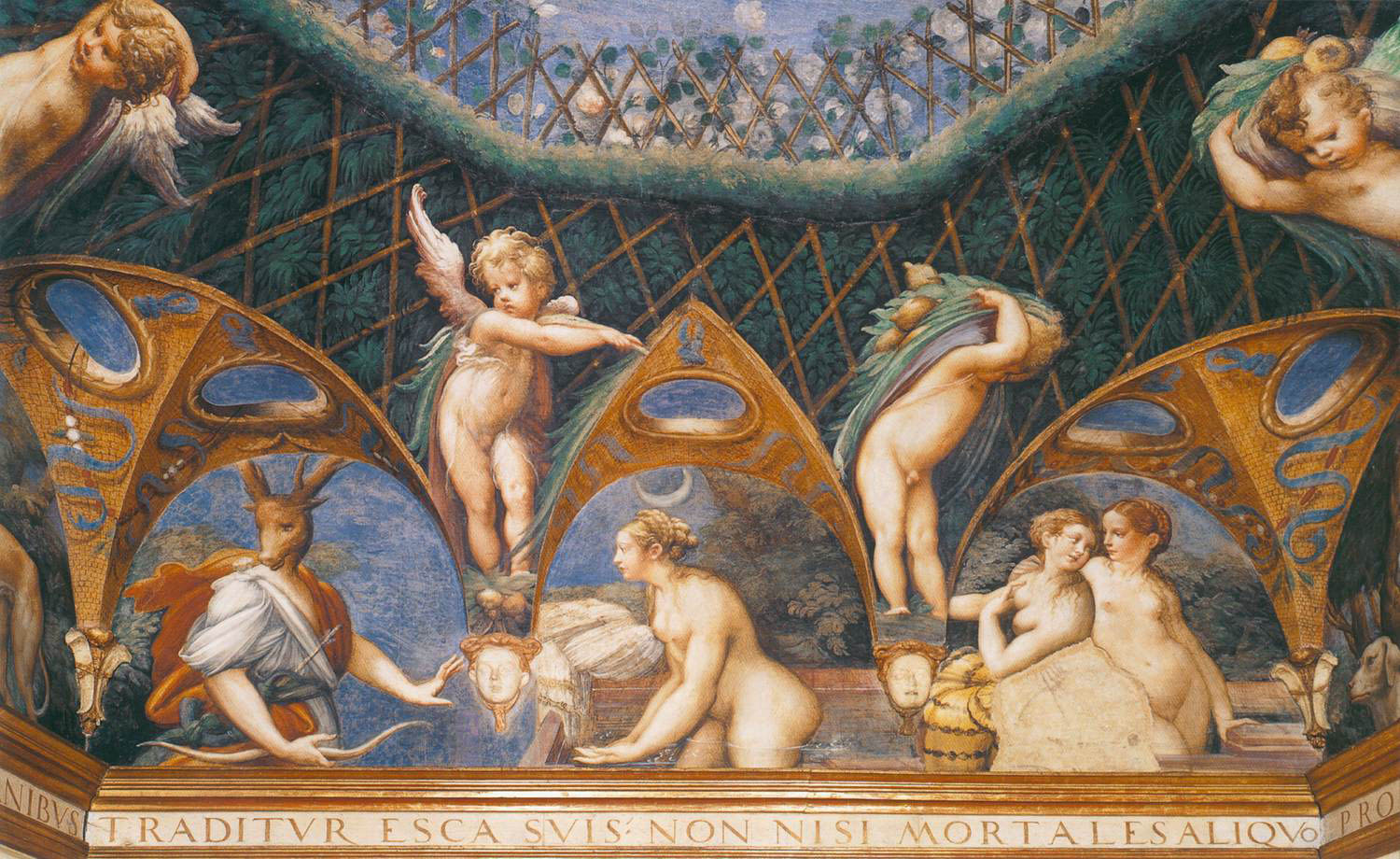
“Diana and Actaeon” (c. 1523-1524), Camera di San Paolo, Parma
Part of a series of mythological frescoes created for the Camera di San Paolo, this work exemplifies Correggio’s early exploration of illusionism through mythological narrative. The playful interaction of figures, coupled with Correggio’s delicate rendering of light and shadow, creates a scene brimming with movement and vitality.
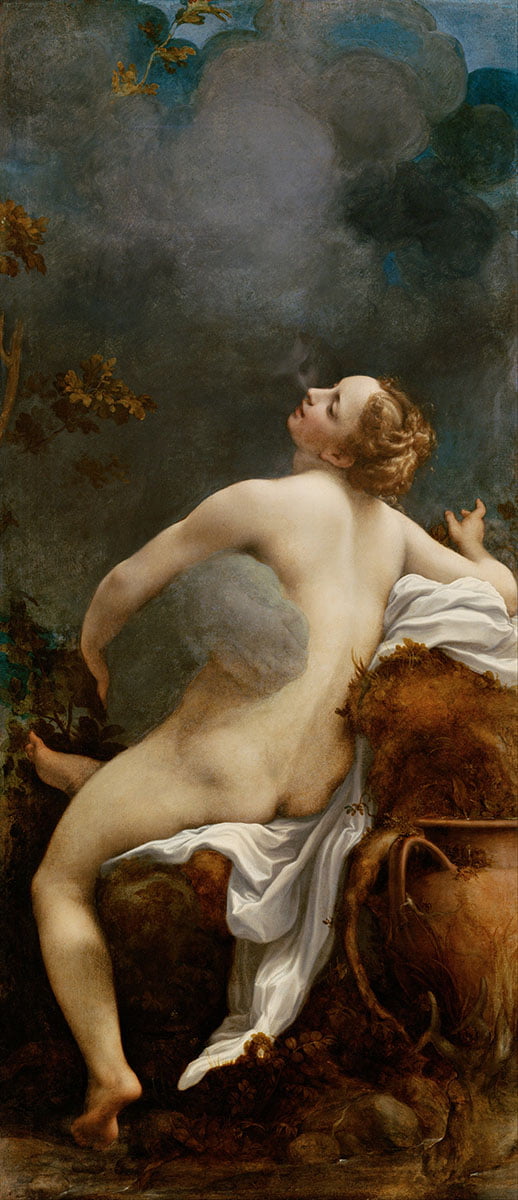
“Jupiter and Io” (c. 1531-1532), part of the series for Federico II Gonzaga
This sensual portrayal of the mythological encounter between Jupiter and Io demonstrates Correggio’s ability to convey emotion and narrative through innovative use of perspective and chiaroscuro. The intimate composition and the ethereal quality of the light underscore the transcendent nature of their encounter.
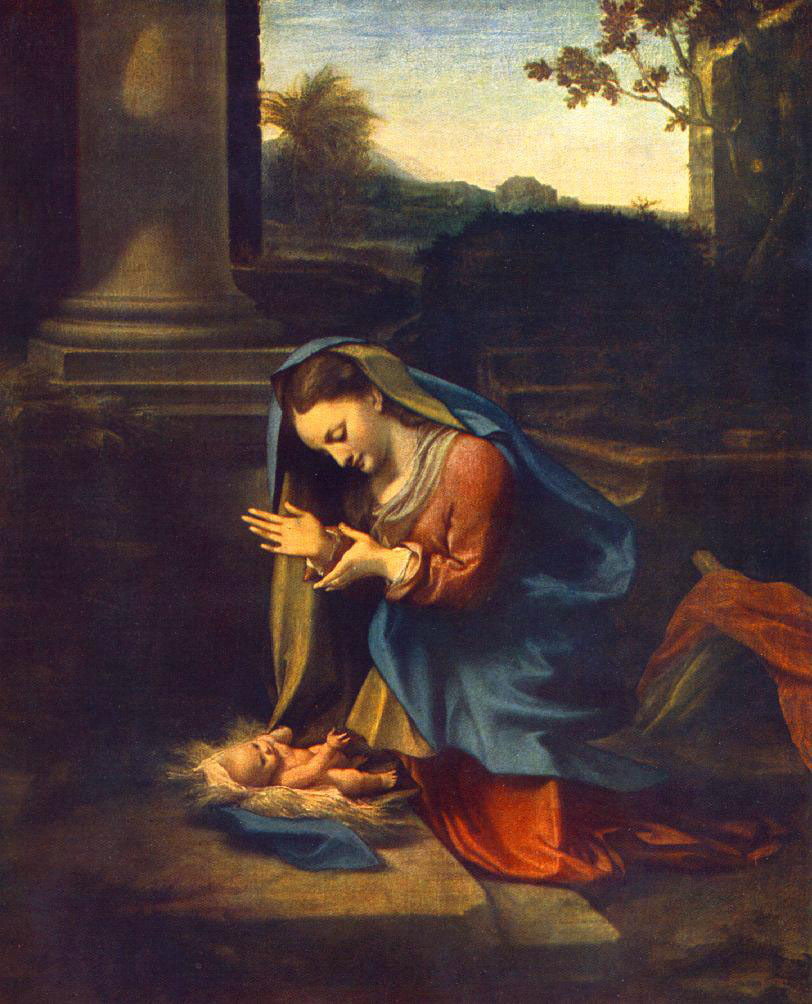
“The Adoration of the Child” (c. 1526), Uffizi Gallery, Florence
In this intimate religious scene, Correggio presents the Holy Family in a tender moment, bathed in a divine light that seems to emanate from the Christ Child. The use of light to convey divinity and the careful arrangement of figures to guide the viewer’s gaze are hallmarks of Correggio’s approach to creating emotionally resonant works.
These works collectively underscore Correggio’s unparalleled ability to convey the divine through the medium of paint. His innovative techniques in perspective, light, and composition not only advanced the art of illusionism but also left a lasting impact on the visual arts, inspiring generations of artists to explore the boundaries of reality and illusion in their own works.
Impact on Baroque Art
Correggio’s illusionistic techniques and his exploration of light and shadow significantly influenced the development of Baroque art. His ability to create emotional resonance through dynamic compositions and dramatic use of perspective inspired Baroque artists to pursue a similar intensity in their own works. Artists such as Giovanni Lanfranco and Pietro da Cortona drew directly from Correggio’s example, pushing the boundaries of illusionism in their ceiling frescoes and expanding upon his techniques to evoke a sense of the divine. Correggio’s impact extended beyond Italy, influencing the development of ceiling painting across Europe, with artists such as Rubens in Flanders and Pozzo in Austria adopting and adapting his methods to suit their own artistic visions.
The emotional immediacy and immersive quality of Correggio’s work, combined with his innovative use of illusionism, set a precedent for the Baroque emphasis on viewer engagement and the blurring of boundaries between art and spectator. His frescoes demonstrated how art could envelop viewers, drawing them into a narrative or spiritual experience that transcended the physical limitations of the space. This legacy of creating compelling, immersive environments through illusionistic painting became a hallmark of Baroque art, enriching the visual vocabulary of artists and elevating the potential of architectural spaces to evoke awe and wonder.
Conclusion
Correggio’s contributions to the art of illusionism represent a pivotal moment in the transition from the Renaissance to the Baroque. Through his innovative ceiling frescoes and masterful manipulation of light, perspective, and composition, Correggio succeeded in “bringing heaven to earth,” transforming architectural spaces into portals to the divine. His work not only challenged the conventions of his time but also laid the groundwork for future generations of artists to explore the emotional and spatial possibilities of illusionistic painting. Correggio’s legacy is a testament to the enduring power of art to bridge the gap between the earthly and the ethereal, inviting viewers into a shared space of beauty and transcendence.
Questions and Answers
Q: How did Correggio’s work influence the Baroque movement?
Correggio’s work profoundly influenced the Baroque movement, especially in the realm of ceiling frescoes. His techniques in creating illusionistic depth and dynamic compositions were adopted and expanded upon by Baroque artists, who sought to evoke emotional intensity and viewer engagement through similar methods. His exploration of light and shadow, as well as his ability to create immersive, celestial scenes, set a standard for the dramatic and emotive qualities that would define Baroque art.
Q: What distinguishes Correggio’s approach to illusionism?
Correggio distinguished himself through his exceptional ability to create the illusion of three-dimensional space on flat surfaces, using innovative perspective techniques, dramatic foreshortening, and a masterful handling of chiaroscuro. His approach to illusionism was characterized by its emotional depth and its capacity to engage viewers directly, making them feel as though they were part of the scene depicted.
Q: Can Correggio’s illusionistic techniques be seen in other forms of art besides frescoes?
Yes, while Correggio is best known for his illusionistic ceiling frescoes, his innovative techniques can also be observed in his panel paintings and altarpieces. In these works, Correggio applied his understanding of light, perspective, and composition to create depth and emotional resonance, demonstrating the versatility and influence of his illusionistic approach across different media.