
Lavinia Fontana (1552–1614) stands as a luminous figure in the pantheon of Renaissance art, distinguished not only by her exceptional talent and the breadth of her oeuvre but also by her pioneering presence as a woman in a domain traditionally dominated by men.

Table of Contents
- Introduction
- Early Life and Education
- Fontana’s Career and Achievements
- Notable Works and Themes
- Fontana’s Portrayal of Women
- Legacy and Influence
- Conclusion
- Questions and Answers
Introduction
Born in Bologna in 1552, into a family where art coursed through the generational veins, Fontana was primed for an artistic career from an early age. Under the tutelage of her father, Prospero Fontana, a prominent painter of the Bolognese School, she honed her craft with a dedication that was rare for women of her time. Fontana’s work transcended the conventional boundaries set for female artists in the Renaissance, allowing her to venture into various themes, including religious subjects, portraits, and mythological scenes, with a depth and finesse that garnered high acclaim. Beyond her artistic achievements, Fontana’s life story is a testament to the resilience and perseverance of women seeking to express their creativity and intellect in an era that often relegated them to the margins. Her success laid down a marker, challenging societal norms and opening doors for future generations of female artists. Through her vibrant canvases, rich with detail and emotion, Fontana offered a window into the soul of the Renaissance, portraying the intricate tapestry of human experience with a lens that was profoundly personal and universally resonant.
Early Life and Education
Lavinia Fontana was the daughter of Prospero Fontana, a prominent painter of the Bolognese School, who played a crucial role in her artistic training. From a young age, she showed exceptional talent, absorbing the lessons of the Mannerist style prevalent in her father’s workshop. Unlike many women of her time, Fontana received formal training in drawing, painting, and the principles of composition, allowing her to develop a distinctive style characterized by detailed realism and vibrant color. Her early works, often small-scale religious and mythological scenes, already hinted at the technical skill and emotional depth that would define her career.
Fontana’s Career and Achievements
Fontana’s career took off in Bologna, where she became known for her portraits, capturing the likenesses and personalities of her subjects with unprecedented clarity and depth. Her ability to portray women, in particular, earned her a significant clientele among the city’s nobility. Fontana’s success led her to Rome, where she was invited to work under the patronage of Pope Clement VIII and later, Pope Paul V, becoming one of the few women of her time to receive such honors. In Rome, her work expanded to include larger religious compositions, which were acclaimed for their sophisticated use of color and light, demonstrating her mastery over both portrait and narrative painting.
Notable Works and Themes
Lavinia Fontana’s oeuvre is celebrated for its versatility and depth, showcasing her mastery across a range of subjects. Here are five of her most notable works that highlight her contributions to Renaissance art:
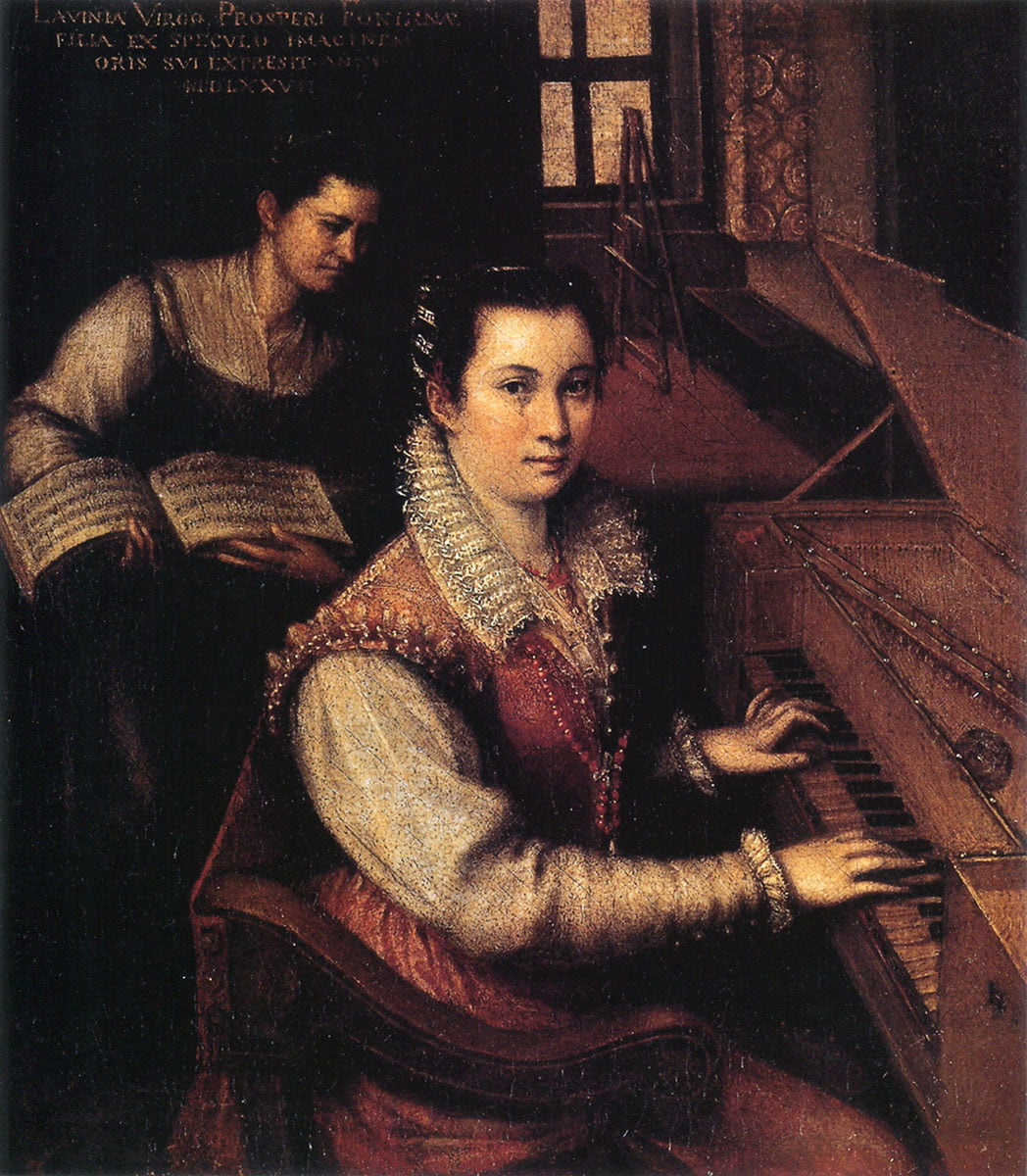
“Self-Portrait at the Clavichord with a Servant” (1577)
This self-portrait is a profound expression of Fontana’s identity as both an artist and a woman of her time. It depicts her playing the clavichord, a symbol of her education and status, with a servant by her side, underscoring her social position. The work is celebrated for its detail, composition, and the subtle interplay of glances and gestures that reveal Fontana’s self-awareness and confidence.
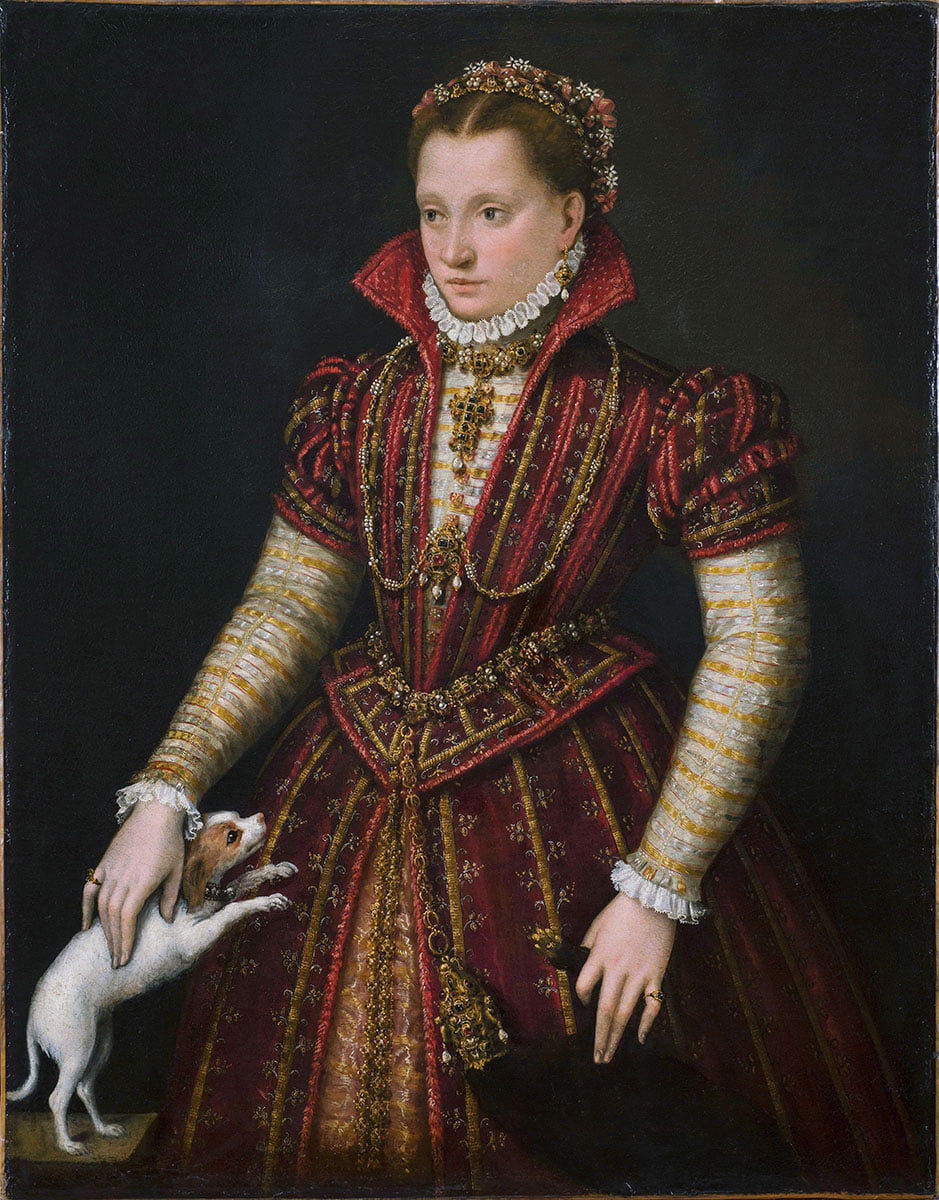
“Portrait of a Noblewoman” (c. 1580)
Renowned for her portraiture, Fontana’s depiction of a noblewoman is a testament to her ability to capture not just the physical likeness but also the inner life of her subjects. The intricate details of the sitter’s attire and the nuanced expression on her face reflect Fontana’s meticulous attention to detail and her deep understanding of character.
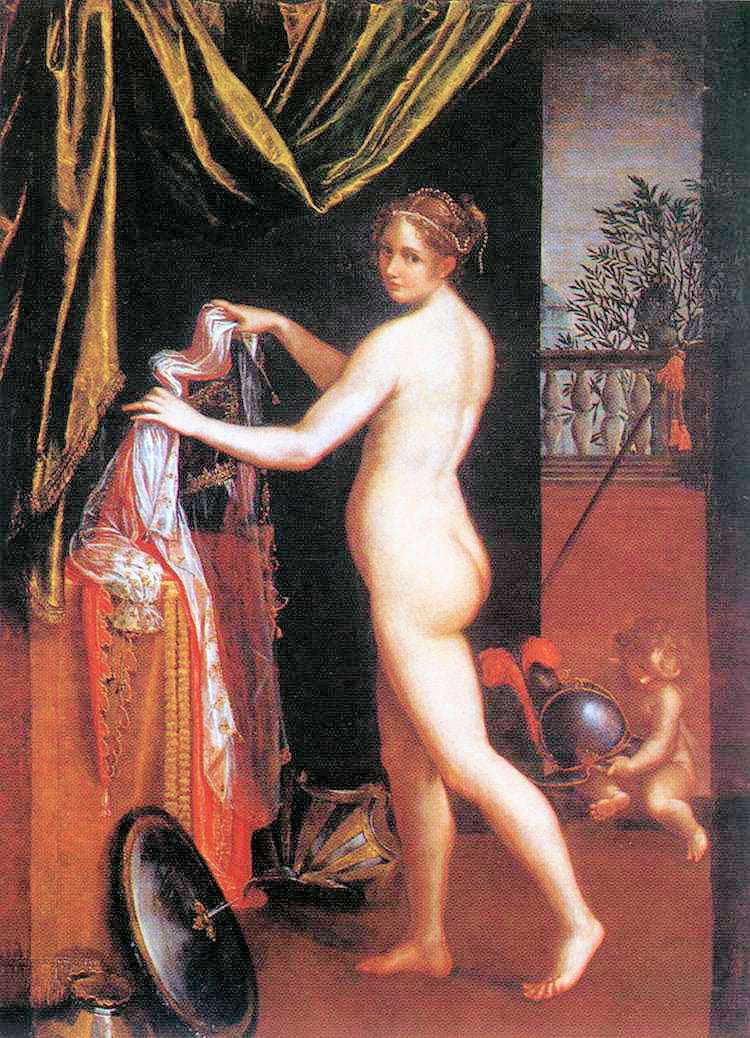
“Minerva Dressing” (1613)
In this late work, Fontana explores a mythological theme, depicting Minerva, the goddess of wisdom and war, in a moment of quiet introspection. The painting stands out for its elegant portrayal of the female form, imbued with grace and strength, and is indicative of Fontana’s skill in rendering mythological subjects with a personal touch.
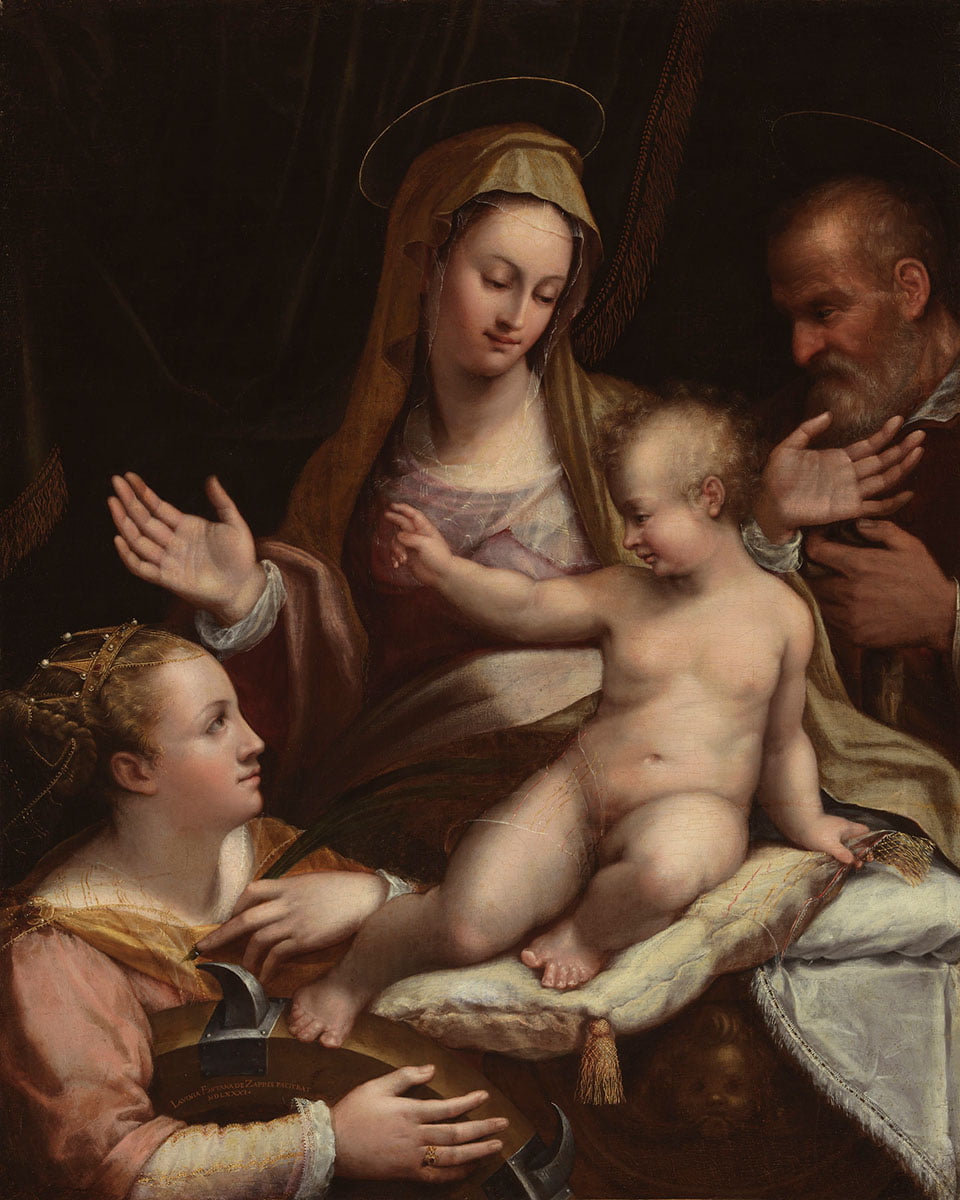
“The Holy Family with Saints” (1589)
This religious composition showcases Fontana’s adeptness at handling complex scenes with multiple figures. The intimate portrayal of the Holy Family, coupled with the reverent attention to the saints, demonstrates her ability to convey spiritual themes with warmth and humanity.
“Noli Me Tangere” (1581)
In this depiction of the biblical scene where Mary Magdalene recognizes the resurrected Christ, Fontana employs a delicate use of light and shadow to capture the profound emotional exchange between the two figures. The painting is a powerful example of her narrative skill and her ability to infuse religious subjects with a sense of immediacy and depth.
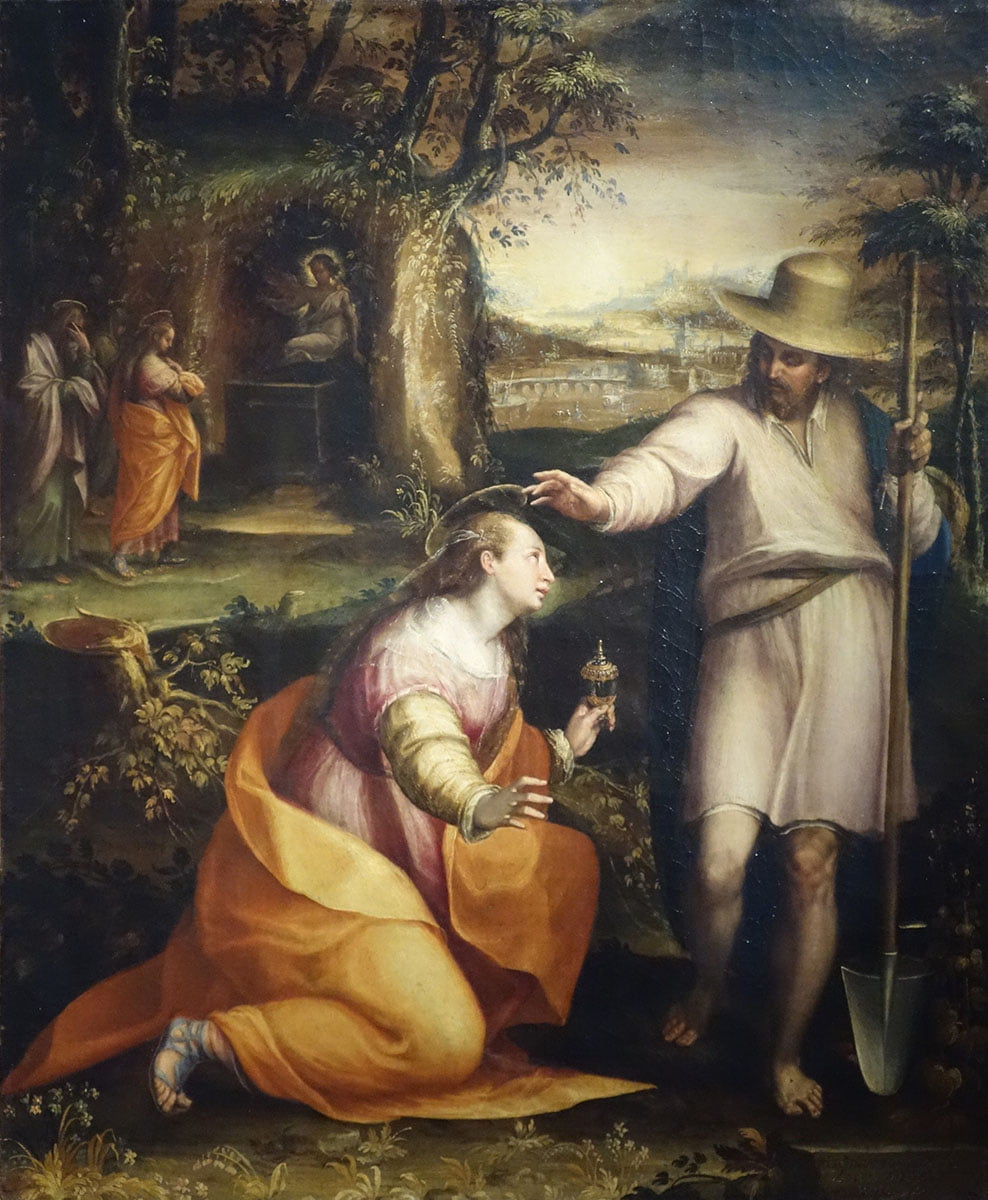
Through these works, Lavinia Fontana established herself not just as a masterful painter but also as a storyteller, capable of weaving complex narratives through her art. Her notable works reflect a life dedicated to the pursuit of artistic excellence and a deep engagement with the world around her, making her one of the most influential female artists of the Renaissance.
Legacy and Influence
Lavinia Fontana’s legacy extends far beyond her contributions to Renaissance portraiture and religious painting. As one of the first female artists to achieve professional success and recognition in the competitive art world of her time, Fontana broke significant ground for women in the arts. Her success challenged the gendered boundaries of the art world, inspiring future generations of female artists to pursue their professional ambitions. Today, Fontana is celebrated not only for her artistic achievements but also for her role in paving the way for women in the art world, making her a true portrait of a Renaissance woman.
Conclusion
Lavinia Fontana’s life and work embody the spirit of the Renaissance, a time of innovation, exploration, and breaking boundaries. Through her masterful portraits and religious compositions, Fontana not only secured her place among the great artists of her time but also challenged the limitations placed on women in the arts. Her legacy as a pioneering female artist continues to inspire and resonate, highlighting the enduring power of talent and determination to overcome the barriers of tradition and expectation.
Questions and Answers
Q: How did Lavinia Fontana contribute to the portrayal of women in the Renaissance?
Lavinia Fontana contributed significantly to the portrayal of women by capturing them in a manner that emphasized their individuality and complexity. Unlike the often idealized representations by her male contemporaries, Fontana’s portraits of women showcase their personalities, status, and personal stories, providing a more nuanced and realistic view of Renaissance women.
Q: What made Lavinia Fontana unique among her peers?
Fontana was unique for several reasons, notably her status as a successful female artist in a male-dominated profession. Her ability to gain recognition and respect from patrons and peers alike set her apart. Additionally, her technical skill, particularly in portraiture, and her approach to depicting her subjects with a depth of character and realism were distinctive aspects of her work.
Q: How did Lavinia Fontana’s upbringing influence her career as an artist?
Fontana’s upbringing in an artistic family, under the tutelage of her father, Prospero Fontana, a well-respected painter, provided her with a solid foundation in the arts. This early education not only honed her technical skills but also instilled in her the confidence and ambition to pursue a professional career as an artist, a rarity for women of her time.
Q: Are there any specific techniques or styles that Fontana is known for?
Fontana is known for her mastery of portraiture, characterized by detailed realism, vibrant color, and sophisticated use of light and shadow. Her portraits are distinguished by the meticulous attention to the textures and details of clothing and jewelry, enhancing the realism and personality of her subjects. Additionally, her self-portraits and religious scenes display a thoughtful composition and emotional depth that are hallmark features of her style.
Q: How has Lavinia Fontana’s legacy influenced modern perceptions of female artists?
Lavinia Fontana’s legacy has significantly influenced modern perceptions of female artists by demonstrating that women can achieve professional success and recognition in the arts. Her pioneering career challenges historical narratives that have often marginalized or overlooked women’s contributions to art. Today, Fontana is celebrated not just for her artistic achievements but also as an inspiration for female artists striving to overcome gender-based barriers in the art world and beyond.
Q: What was Lavinia Fontana famous for?
Lavinia Fontana was famous for her remarkable contributions to Renaissance art as one of the first female career artists in Europe. She gained recognition primarily for her portraits, which were notable for their intricate detail, rich colors, and the depth of character they portrayed. Fontana was also known for her religious compositions and mythological scenes, which demonstrated her versatility and technical skill. Her ability to achieve professional success in a male-dominated field and her role in opening doors for future generations of female artists are significant aspects of her legacy.
Q: How did Lavinia Fontana die?
Lavinia Fontana passed away in 1614 in Rome. While the specific cause of her death is not widely documented, it is known that she died after having a successful career that spanned several decades. At the time of her death, Fontana had established herself as a respected artist in Rome, where she worked under the patronage of the Papal court and contributed significantly to the artistic landscape of the era. Her death marked the loss of one of the Renaissance’s most pioneering female figures in the arts.