
The art of portraiture has been a significant form of artistic expression for millennia, capturing not just physical likenesses but also delving deep into the psyche, status, and even the soul of the subject. From the intricate carvings of ancient civilizations to the digital selfies of today, portraits offer a window into the evolving perceptions of self and society. This article traces the journey of portraiture, highlighting its transformation and its enduring relevance in the world of art.

Table of Contents :
- Ancient Portraiture
- Renaissance: The Birth of Individualism
- Romanticism and Beyond: Capturing the Soul
- Photography: A New Medium Emerges
- The Rise of the Selfie: Portraiture in the Digital Age
- Conclusion
- Questions and Answers
Ancient Portraiture
Long before the Renaissance masters graced canvases with their lifelike portraits, ancient civilizations were already capturing human likenesses in various mediums. The art of portraiture in antiquity was not merely about replicating a person’s physical features but often carried deeper symbolic and ceremonial significance.
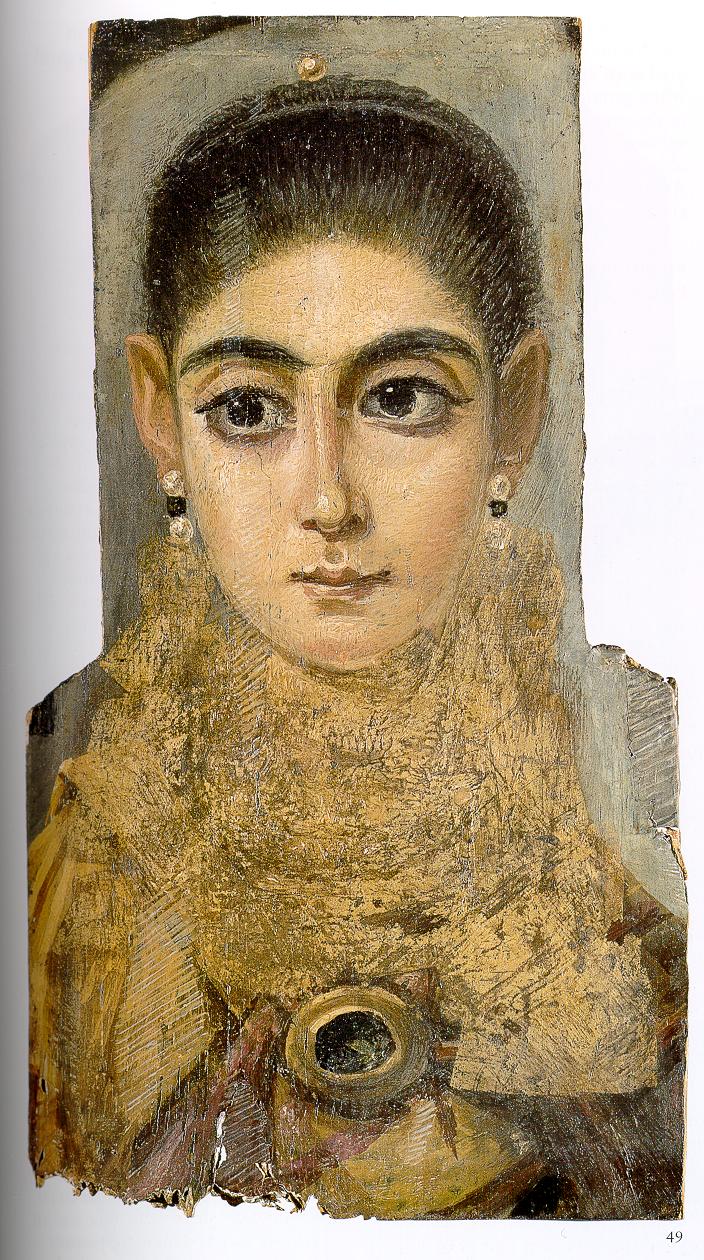
- Egyptian Portraits: Ancient Egyptians placed great importance on the preservation of one’s image for the afterlife. Tomb paintings and carved statues often depicted the deceased in an idealized form, capturing their status and role in society. The Fayum mummy portraits, with their encaustic paintings on wooden panels, stand out for their incredible realism and detail.

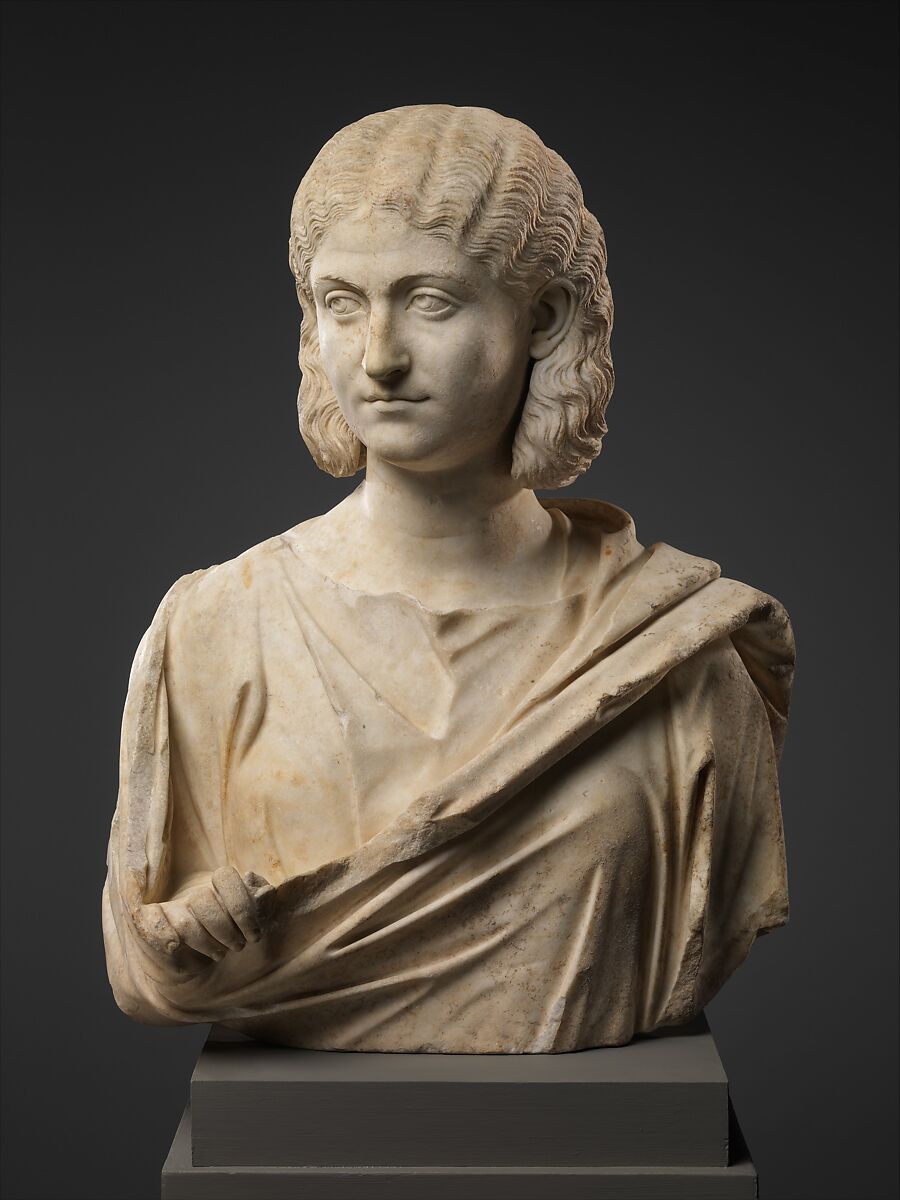
Fayum mummy portrait - Greek and Roman Portraits: The Greeks and Romans brought a more personalized touch to portraiture. While early Greek portraits idealized their subjects, reflecting societal ideals of beauty and virtue, the Romans embraced a more realistic approach. Roman portraits, whether in sculpture or coinage, often showcased intricate details, capturing age lines, individual hairstyles, and even distinct facial expressions.

Roman portrait sculpture - Chinese and Far Eastern Traditions: In ancient China and other parts of the Far East, portraiture was deeply intertwined with calligraphy and poetry. Ink portraits, often accompanied by poetic inscriptions, captured not just the likeness but the essence and character of the subject. These portraits were less about physical accuracy and more about capturing the spirit.Image: [Ancient Chinese ink portrait with accompanying calligraphy.]
- Mesopotamian and Indus Valley Civilizations: While not as detailed as later portraits, the ancient civilizations of Mesopotamia and the Indus Valley produced stylized representations of their rulers and deities. These early attempts at portraiture, often on seals or pottery, provide insights into the societal hierarchies and religious beliefs of these cultures. the mortal realm and the divine, between the individual and the society.
These early portraits, while diverse in style and purpose, set the stage for the evolution of this art form in subsequent ages.
Renaissance: The Birth of Individualism
The Renaissance, spanning roughly from the 14th to the 17th century, marked a reawakening of art, culture, and intellectual pursuits in Europe. This period heralded a shift from the collective and religious focus of the Middle Ages to an emphasis on individualism and humanism. Portraiture, too, underwent a significant transformation during this era.
- Emergence of Individualism: Renaissance portraits were no longer just about denoting status or religious devotion. They became a means to capture the unique personality, emotions, and thoughts of the subject. Artists began to pay meticulous attention to details, from the texture of the skin to the play of light and shadow on facial features.

Mona Lisa by Leonardo da Vinci , at The Louvre - Technological Advancements: The invention of oil paints allowed artists to create more depth and realism in their portraits. The layering technique, combined with a better understanding of human anatomy and perspective, resulted in lifelike depictions that were unparalleled in previous eras.

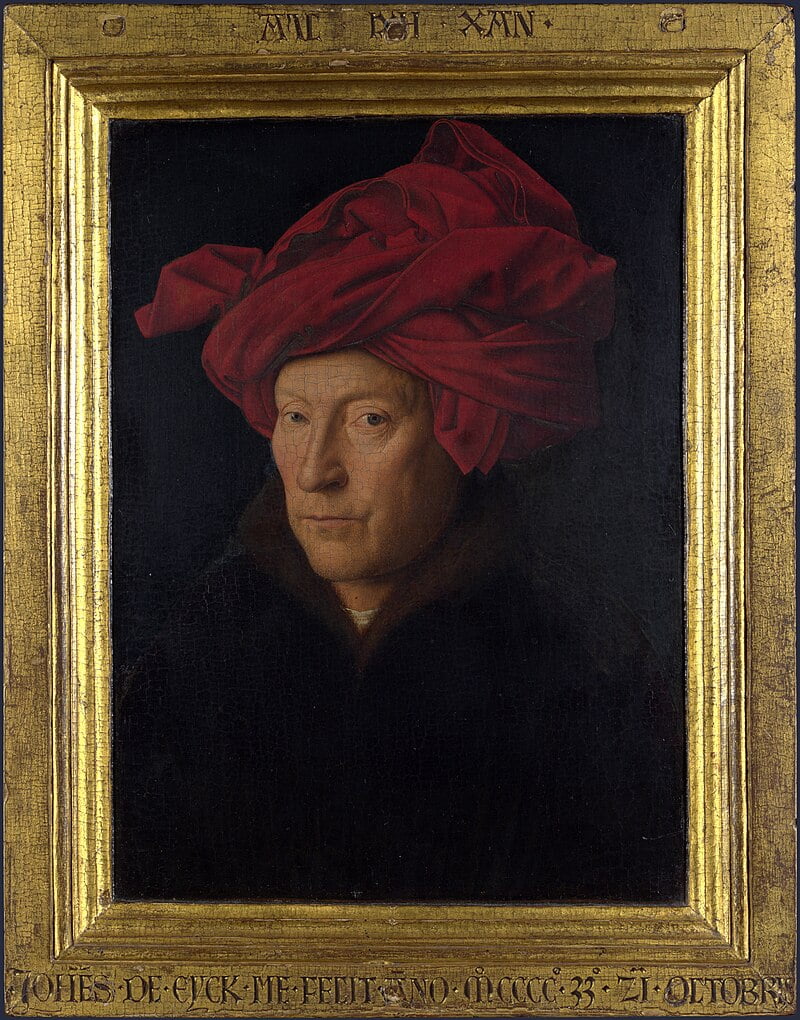
Jan van Eyck’s Man in a Red Turban - Portraiture as a Reflection of Society: The Renaissance society, with its burgeoning merchant class and intellectual elites, saw an increase in commissioned portraits. These artworks were not just personal mementos but also tools for social mobility, showcasing the subject’s education, wealth, and taste.

Hans Holbein’s The Ambassadors, The National Gallery, London - Female Portraiture: While religious themes continued to dominate, the Renaissance also saw an increase in female portraiture. These portraits, often commissioned by or for their male relatives, were a means to showcase family honor, virtue, and beauty.

Renaissance style Digital portrait, available here - Self-portraits: Artists like Albrecht Dürer and Rembrandt turned the lens on themselves, creating self-portraits that were introspective and deeply personal. These artworks provided insights into the artist’s self-perception and the evolving role of artists in society.

Self-portrait by Albrecht Dürer



The Renaissance period, with its emphasis on realism, individualism, and humanistic values, elevated the art of portraiture to new heights. The masterpieces from this era continue to inspire and captivate art enthusiasts and historians alike.
Romanticism and Beyond: Capturing the Soul
Emerging in the late 18th century, Romanticism was a reaction against the strict rationality and classical norms of the Enlightenment. This artistic, literary, and intellectual movement emphasized emotion, individualism, and the sublime beauty of nature. Portraiture, too, saw shifts in style and focus during this era.
- Emotion Over Accuracy: Romantic portraits prioritized capturing the subject’s spirit and emotions over physical accuracy. The play of light, atmospheric effects, and dramatic poses were employed to evoke feelings and moods.

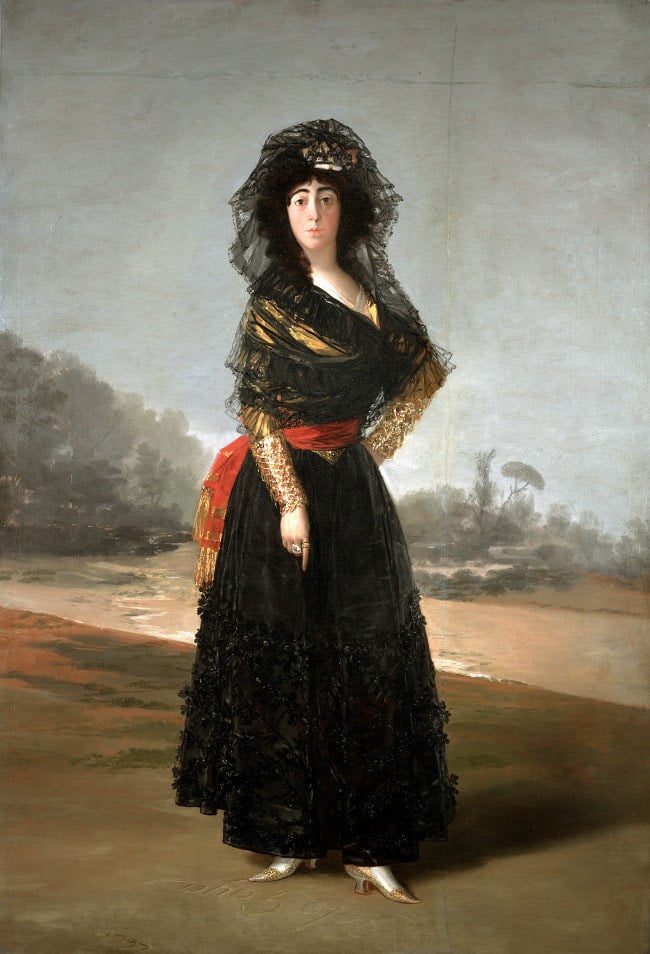
Francisco Goya’s The Duchess of Alba - Nature and the Individual: Portraits from this era often incorporated natural elements, reflecting the Romantic fascination with nature’s raw beauty and power. The landscapes served not just as backgrounds but as extensions of the subject’s inner world.
- Historical and Literary Inspirations: Many Romantic portraits drew inspiration from historical events, myths, and literary works. These artworks went beyond mere representation, aiming to tell stories and evoke deeper philosophical contemplations.

Eugène Delacroix’s Liberty Leading the People - Beyond Romanticism – Realism and Impressionism: As the 19th century progressed, movements like Realism and Impressionism emerged. Realist artists aimed for objective and unembellished portrayals, while Impressionists focused on capturing fleeting moments and the interplay of light. Portraiture adapted, with artists like Édouard Manet and Auguste Renoir bringing fresh perspectives.

Édouard Manet’s Olympia - The Turn of the Century and Modernism: The turn of the 20th century saw the advent of Modernism, with artists breaking free from traditional techniques and exploring abstract forms. Portraits became more experimental, with artists like Picasso and Modigliani redefining the boundaries of the genre.

Pablo Picasso’s Portrait of Dora Maar, Musée Picasso, Paris


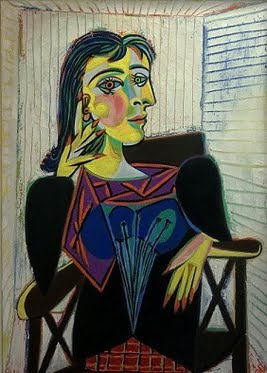
The periods following the Renaissance, especially Romanticism, further expanded the horizons of portraiture. Artists delved deep into the human psyche, capturing not just physical likenesses but the very essence and soul of their subjects.
Photography: A New Medium Emerges
The invention of photography in the 19th century revolutionized the art of portraiture. No longer bound to the long sittings and expensive commissions of painted portraits, photography democratized the portrayal of individuals, capturing fleeting moments with unprecedented accuracy.
- The Daguerreotype Era: The early photographic process of daguerreotypes provided the first practical means of capturing lifelike portraits. These silvered plates, with their sharp details and mirror-like finish, became immensely popular, offering a more accessible and affordable means of immortalizing one’s likeness.
- Studio Photography and Pictorialism: With the advent of studio photography, individuals could pose in controlled settings, using props, backdrops, and lighting to craft their desired image. Concurrently, the pictorialist movement emerged, where photographers employed soft focus, manipulation, and other techniques to create images reminiscent of paintings.
- Documentary and Street Portraits: Photographers like Diane Arbus and Henri Cartier-Bresson took to the streets, capturing candid portraits that reflected the realities and diversities of society. These unposed images offered raw, unfiltered glimpses into the lives of ordinary people.
- Conceptual and Experimental Portraiture: The 20th century saw photographers pushing the boundaries of the medium, using double exposures, collages, and digital manipulations. Artists like Cindy Sherman played with identity and representation, challenging traditional notions of portraiture.
The Rise of the Selfie: Portraiture in the Digital Age
The digital age has ushered in a new era of portraiture: the age of the selfie. With smartphones and social media platforms, self-portraits have become a daily ritual for many, reflecting the evolving perceptions of self in the digital world.
- Instant Gratification and Personal Branding: The selfie offers instant gratification, allowing individuals to curate and share their image on platforms like Instagram. It’s not just about capturing a moment but building a personal brand and narrative.
- Filters, Augmented Reality, and the Idealized Self: Digital tools and filters allow for the enhancement and alteration of selfies, often presenting an idealized version of oneself. Augmented reality features, like Snapchat’s face filters, add playful and fantastical elements to digital self-portraits.
- Selfies as Social Commentary: Beyond mere vanity, some use selfies as a form of social commentary, highlighting issues like body positivity, mental health, and societal norms.
The selfie, while often dismissed as a product of narcissism, is a testament to the ever-evolving nature of portraiture. It reflects the zeitgeist of the digital age, where the personal and the public, the real and the virtual, constantly intersect and redefine each other.

Conclusion
Portraiture, in its myriad forms and mediums, remains one of the most enduring and captivating genres in the realm of visual art. From the meticulously crafted busts of ancient civilizations to the spontaneous digital selfies of today, portraits offer a mirror to society, reflecting the evolving perceptions of identity, self-worth, and cultural values.
The journey of portraiture is, in many ways, the journey of humanity itself. It chronicles our collective aspirations, vulnerabilities, and the ceaseless quest for self-expression. Each portrait, whether a grandiose painting from the Renaissance or a candid snapshot on a smartphone, tells a story—a story of an individual, a moment, an emotion.
The art of portraiture, far from being static, has continuously evolved, adapting to technological advancements, societal shifts, and artistic movements. Yet, its essence remains unchanged. At its core, portraiture is about connection—a connection between the artist and the subject, between the artwork and the viewer. It’s a bridge that spans time and space, linking past generations with the present, the tangible with the intangible.
As we stand at the crossroads of the digital age, with the world at our fingertips and technology reshaping the boundaries of art, the age-old allure of portraiture remains undiminished. It serves as a testament to the human spirit’s insatiable desire to see and be seen, to understand and be understood.
Questions and Answers
Q1: How has technology impacted the art of portraiture over the centuries?
Technology has played a pivotal role in the evolution of portraiture. From the invention of oil paints in the Renaissance, which allowed for greater depth and luminosity, to the advent of photography in the 19th century, which democratized portraiture, and the rise of digital tools in the modern era, technology has continuously reshaped the ways portraits are created, shared, and consumed.
Q2: Are selfies considered a legitimate form of portraiture in the art world?
While often dismissed as mere vanity or narcissism, selfies are gaining recognition in the art world as a modern form of self-portraiture. They reflect contemporary society’s values, aspirations, and the intersection of personal and public lives in the digital age. Some museums and exhibitions have even showcased selfies as a legitimate and influential art form.
Q3: How do cultural differences influence the style and content of portraits?
Cultural values, societal norms, and historical contexts significantly influence portraiture. For instance, while Renaissance Europe emphasized individualism and realism, traditional Chinese portraits were more symbolic, capturing the subject’s spirit and moral character. Cultural nuances shape the aesthetics, symbolism, and purpose of portraits across different societies.
Q4: What role do portraits play in preserving history and collective memory?
Portraits serve as visual records, capturing individuals, moments, and epochs. They offer insights into fashion, societal values, and historical events. From monarchs and leaders to ordinary citizens, portraits immortalize individuals, preserving their legacies for future generations and helping us understand our shared past.
Q5: How have societal norms and values influenced the portrayal of beauty in portraits?
The standards of beauty, as reflected in portraits, have evolved based on societal norms, values, and historical contexts. From the idealized forms of ancient civilizations to the diverse and inclusive representations in contemporary art, portraits showcase changing perceptions of beauty, often challenging or reinforcing societal standards.